You open a recommended playlist hoping to find your next favourite artist.
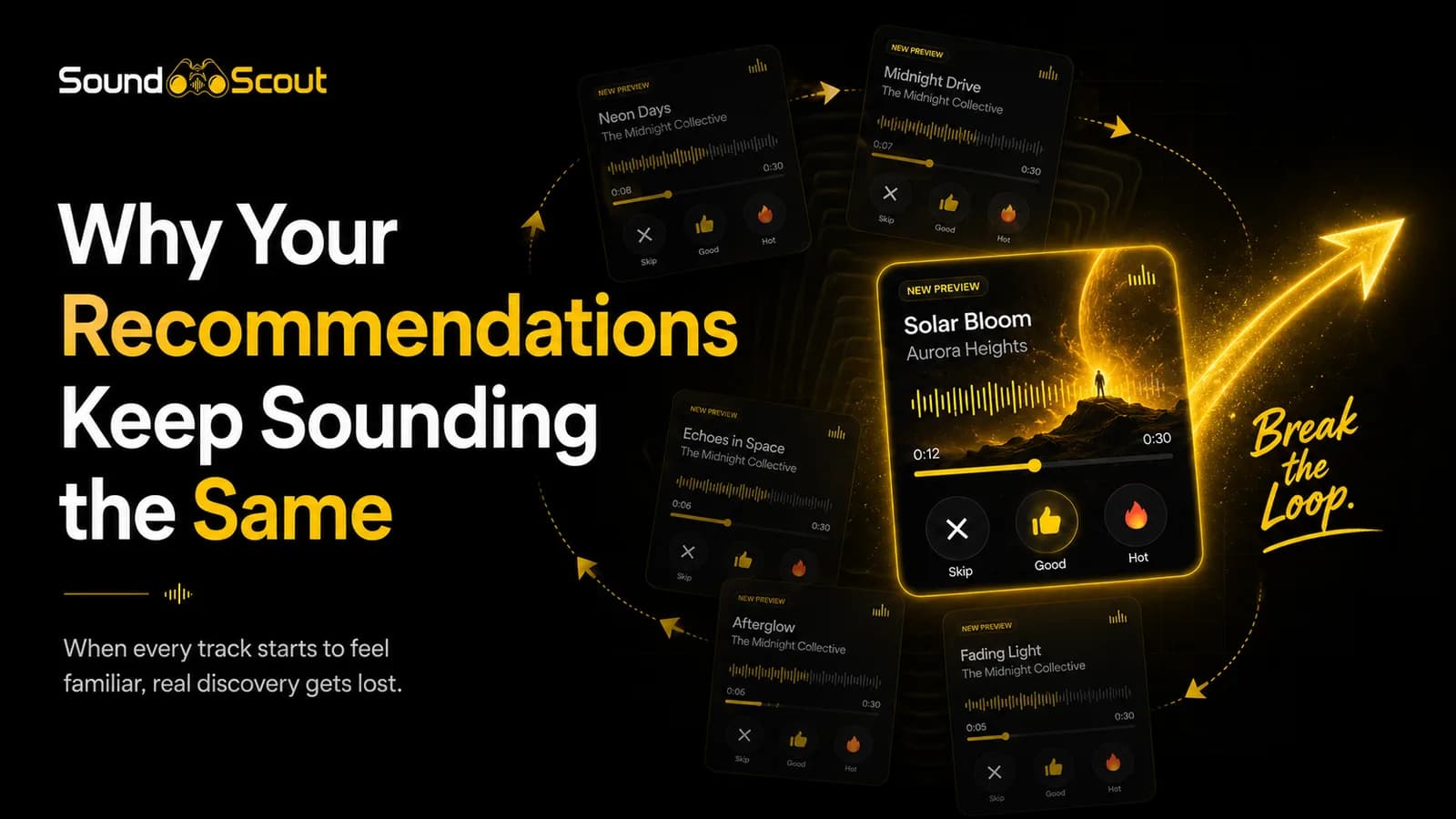
A few songs later, something feels familiar. The names and artwork may be different, but the sound, mood and style all seem surprisingly similar to music you already know.
Personalised recommendations can be useful, but they can also create a listening bubble that becomes harder to escape.
Recommendations learn from what you already like
Most recommendation systems use your previous listening activity to predict what you might enjoy next.
If you regularly listen to a certain genre, tempo or type of artist, the system learns to show you more of the same. That makes sense. Familiar music is less likely to be skipped, so it is considered a safer recommendation.
The problem is that safe recommendations are not always genuine discovery.
Finding another song that matches your current playlist can be enjoyable, but it may not introduce you to something completely unexpected.
Your listening bubble becomes more specific
Every play, skip, replay and saved track helps shape future suggestions.
Over time, this can narrow what you are shown. Instead of introducing you to entirely new corners of music, recommendations may become increasingly focused on variations of what you already enjoy.
You might discover new songs, but still feel like you are hearing the same voices, production styles and moods repeatedly.
That is the difference between finding more music and expanding your music taste.
Popularity can influence what gets discovered
Recommendation systems also rely on signals showing that other listeners are already engaging with a track.
This can make it easier to recommend music that has already gained attention. Meanwhile, an unfamiliar artist without a large audience may receive fewer opportunities to reach new listeners, even when their music is exactly what someone has been looking for.
Popularity can be a useful signal, but it does not automatically tell you whether a song is right for you.
Sometimes the track you connect with most is the one almost nobody around you has heard yet.
How to escape repetitive recommendations
Breaking out of your usual listening bubble requires a more active approach.
Try listening without checking how popular the artist is first. Explore genres you would not normally choose. Follow recommendations from people whose taste challenges yours rather than perfectly matching it.
Most importantly, give unfamiliar music a fair chance before comparing it with what you already know.
Discovery becomes more exciting when you do not know exactly what is coming next.
Discovery should feel like discovery
SoundScout is being built around that idea.
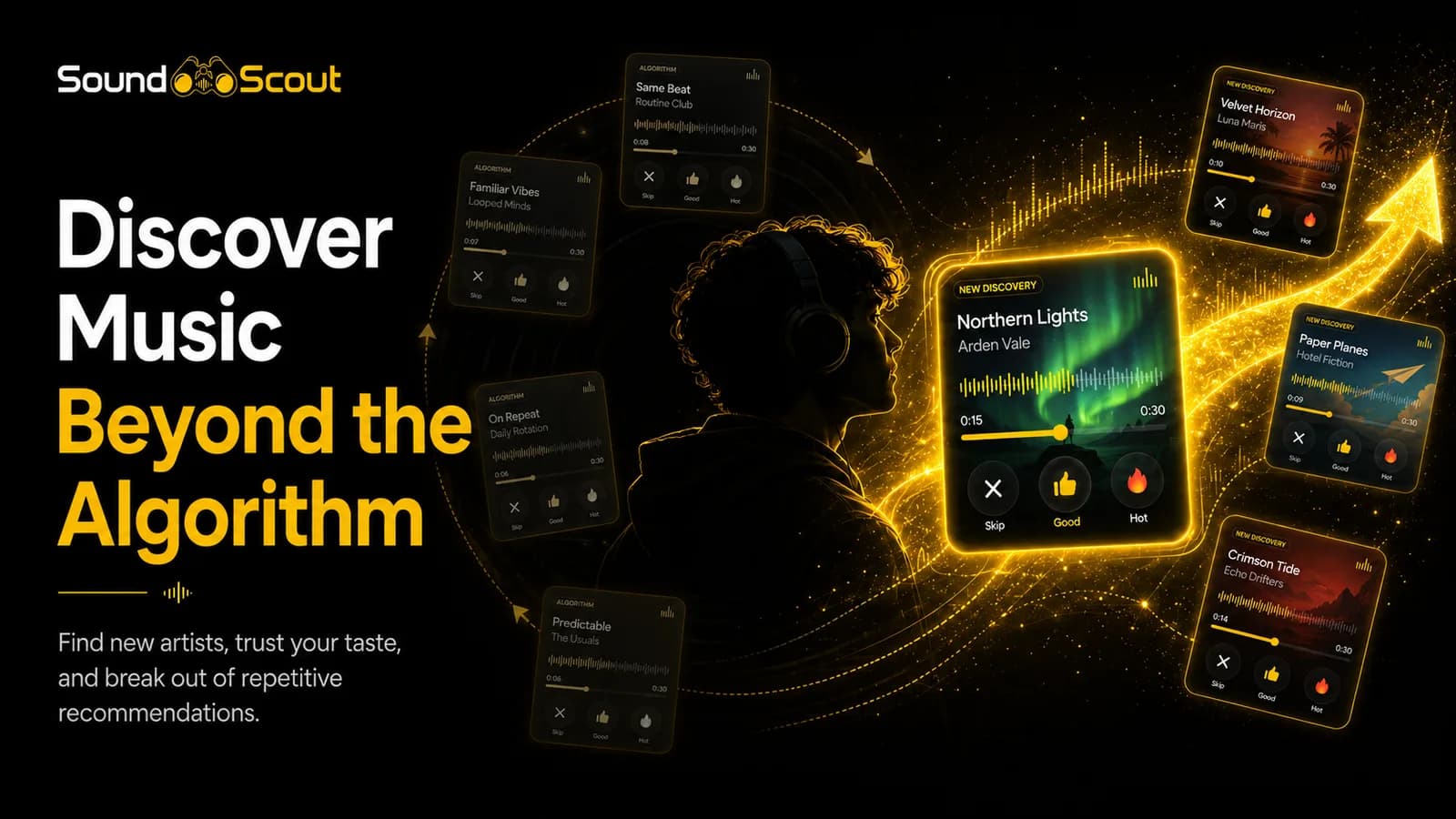
Listeners hear short previews from independent and emerging artists, then react with Skip, Good or Hot. The focus is on your immediate response to the music, not how many followers the artist has or how popular the track already is.
Your next favourite artist may not sound exactly like the artists already in your library.
You simply need a better opportunity to hear them.